What Is Oolong Tea? A Fine Dining Guide

Oolong is the tea sommeliers reach for when a menu needs range. It can drink as bright as a spring garden or as deep as toasted caramel, and a single portion of leaf can carry a table through several courses. For a five-star dining room, no leaf works harder.
What Is Oolong Tea?
Oolong comes from the same plant as every true tea, Camellia sinensis. What sets it apart is oxidation. Green tea is barely oxidized, black tea is fully oxidized, and oolong is stopped deliberately somewhere in between. The tea master decides exactly where, and that single decision shapes everything in the cup.
The leaves are withered, then bruised and turned so their edges begin to oxidize, then fired to lock the character in place. Many oolongs are rolled tightly into small pearls that unfurl into full leaves as they steep, a quiet piece of theatre in a glass teapot. Others are twisted into long, dark strips and finished over charcoal.
What Does Oolong Taste Like?
Think of oolong as a spectrum rather than a single flavor.
Lightly oxidized oolongs are floral, creamy and clean, with notes of orchid, lilac and fresh cut greens. Medium oolongs bring stone fruit and honey. Deeply oxidized and roasted oolongs turn toward toasted grain, dark caramel, cocoa and mineral, with a long, warm finish.
This range is exactly why oolong belongs on a fine dining menu. One family of tea can open a meal, partner a main course and close it with dessert.
Where the Great Oolongs Come From
The classic origins are China's Fujian province and Taiwan. Anxi county in Fujian is home to Tie Guan Yin, the Iron Goddess of Mercy, a rolled oolong prized for its orchid fragrance and clean, sweet finish. The Wuyi Mountains, also in Fujian, are known for rock oolongs with deep roast and mineral character. Guangdong's Phoenix Mountains produce Dan Cong oolongs with striking natural fruit and floral aromas, and Taiwan's high mountain gardens are celebrated for silky, buttery leaves.
The Jenwey Oolong Selection
The house carries oolongs chosen to cover the full spectrum a dining room needs.
Tie Guan Yin is the floral end: close to green tea, with sweet, clean aromas and hints of sage and sweet grasses. Hand Rolled Chinese Oolong balances green and black notes and opens into a stunning full leaf in the cup. Almond Oolong pairs fruity, floral oolong with rich almond for a smooth marzipan finish, made for chocolate and dairy desserts. Prosperity Golden Oolong is finished with delicate threads of gold leaf that unfurl in the water, a cup designed to be seen as much as tasted.
Explore the full range in the Jenwey collections.
How to Brew Oolong
Oolong prefers water below a full boil, generally between 185 and 205 degrees Fahrenheit. Lighter, greener oolongs sit at the lower end of that range; roasted oolongs welcome the higher end.
For Western service, steep about one teaspoon per cup for three to five minutes. For gongfu service, the traditional Chinese method, use more leaf in a small gaiwan or glass teapot and pour short infusions of thirty seconds to a minute. Quality oolong is made to be steeped again and again, with each infusion revealing a new layer as the leaves open.
How Fine Dining Rooms Serve Oolong
Tea pairing has become a serious conversation at the world's most celebrated tables, and the Michelin Guide itself has written about pairing tea with tasting menus. Oolong is the natural place to begin.
A light oolong such as Tie Guan Yin flatters raw seafood, shellfish and spring vegetables. A balanced oolong stands up to roast poultry, mushrooms and soy-glazed dishes. Almond Oolong belongs beside chocolate, crème brûlée and cheese courses.
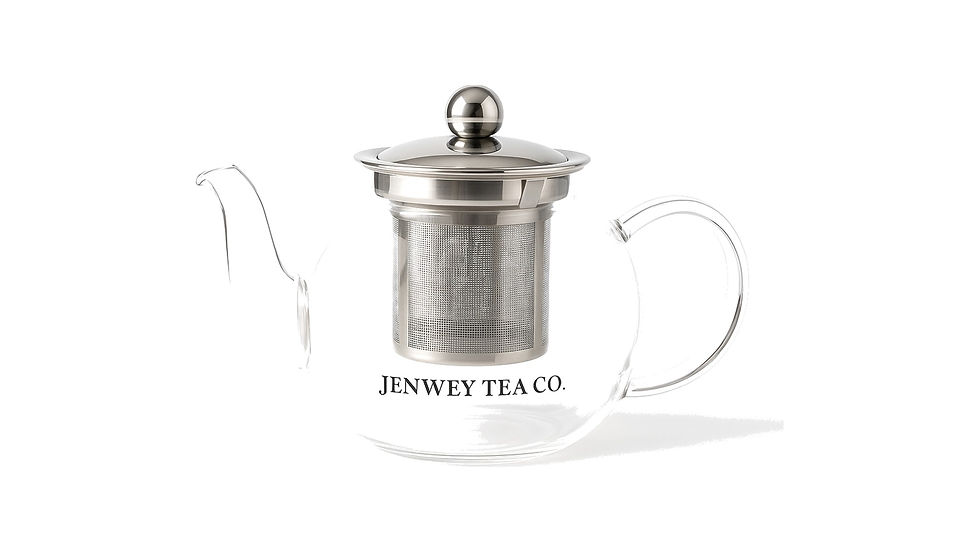
At Jenwey we call this ritual The Second Steep. One portion of Tie Guan Yin is brewed tableside in a glass teapot and poured across the meal, each infusion timed to a course and served in double-walled glass. The guest watches the leaves open as the evening unfolds. For the property, a single measure of leaf becomes a multi-course pairing, which makes it one of the most elegant and efficient beverage programs a dining room can offer.
Bringing Oolong to Your Property
For hotels, private clubs and fine dining rooms, the Jenwey wholesale program supplies loose leaf oolong in volume, with service training and signature blends created for your property. Begin a wholesale conversation with our Tea Master.
Frequently Asked Questions
What is oolong tea?
Oolong is a partially oxidized tea from the Camellia sinensis plant, sitting between green and black tea. Its flavor ranges from floral and creamy to roasted and caramel-like, depending on how far the leaves are oxidized and fired.
What does oolong tea taste like?
Light oolongs taste floral, sweet and clean, often with orchid notes. Darker, roasted oolongs taste of toasted grain, caramel and cocoa with a long, warm finish.
What temperature should oolong be brewed at?
Brew oolong between 185 and 205 degrees Fahrenheit, cooler for green, floral styles and hotter for roasted ones. Avoid a rolling boil, which can flatten the aromatics of lighter oolongs.
Can you steep oolong more than once?
Yes, quality oolong is made for multiple infusions, and many leaves give several excellent steeps. Each infusion reveals a slightly different character as the leaves open.
What is Tie Guan Yin?
Tie Guan Yin, the Iron Goddess of Mercy, is a celebrated oolong from Anxi in China's Fujian province. It is known for its orchid fragrance, clean sweetness and tightly rolled leaves.
What food pairs well with oolong tea?
Light oolongs pair beautifully with seafood, shellfish and delicate vegetables. Roasted and nutty oolongs pair with poultry, mushrooms, chocolate and dairy based desserts.




Comments